
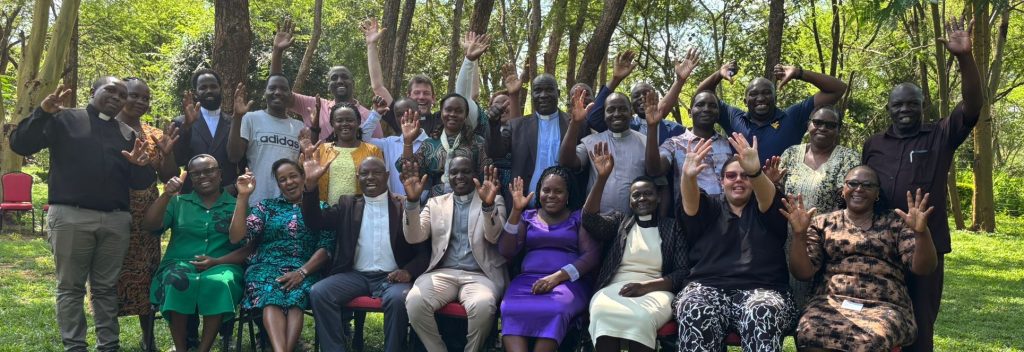
Reconciliation Initiatives (RI) recently ran a three-and-a-half day residential Peacemaking Training of Trainers conference at the Sagana venue near Meru to equip experienced clergy in the Anglican Church of Kenya (ACK) for practical peacemaking .
The programme equipped leaders to better navigate the complex realities of tension and conflict. It also gave them resources to offer training for others in their dioceses.
In Kenya, local clergy are respected public figures. Families and community members routinely bring disputes directly to the parish priest for mediation. These can include land and family inheritance issues, marital tensions, and tribal frictions.
Revd Fedis Nyagah, RI’s Kenya Project Manager, observed:
“This training came as an answer to prayer for many. Conflict will always be there. But how leaders look at it, and how leaders behave even during times of tension and conflict really matters.”
To make sure that the conference was relevant to participants’ contexts and needs, the facilitation team, including Fedis and RI Director, Revd Dr Alastair McKay, ran an interview process before the event. Alastair explained:
“We held an interview with every one of the 22 participants to try and understand what the challenges were they faced, what sort of situations they found difficult, and how confident and equipped they felt to deal with the tensions and conflicts, both in the life of the church and in the wider community.”
The training helped leaders shift their focus away from trying to secure a specific outcome, and instead focus on leading a healthy, fair process.
The training highlighted that while a leader can rarely decide the resolution of a dispute, they can create a safe space and be stewards of an even-handed process to enable the parties themselves to find a way forward. For many attendees, this insight translated directly into greater confidence to face unresolved disputes in their local setting.
Reflecting on the week, Revd Fedis shared:
“The week was exciting. We had a very energised group, eager to learn, eager to start in their own way, in their diocese, in their communities. There was lots of learning, and participants were looking forward to practicing what they had learned.”
Participants are already actively sharing their knowledge from this conference locally in their dioceses. RI is supporting them over the coming year through an online community of practice, where participants can share their experiences of delivering local training and can reflect together on how to address challenges faced.
Reflecting on the residential, Alastair said:
“The course was highly participative, and this first cohort was fully engaged. There was genuine excitement at what people were learning. In particular, that grasped that they can have control of the process, but they can’t have control of the outcome; and that they can bring their skills and gifts to shape a good process and can trust the outcome to parties themselves, whatever that may be.”
Watch a video of the week.
Hear from a participant of the conference.