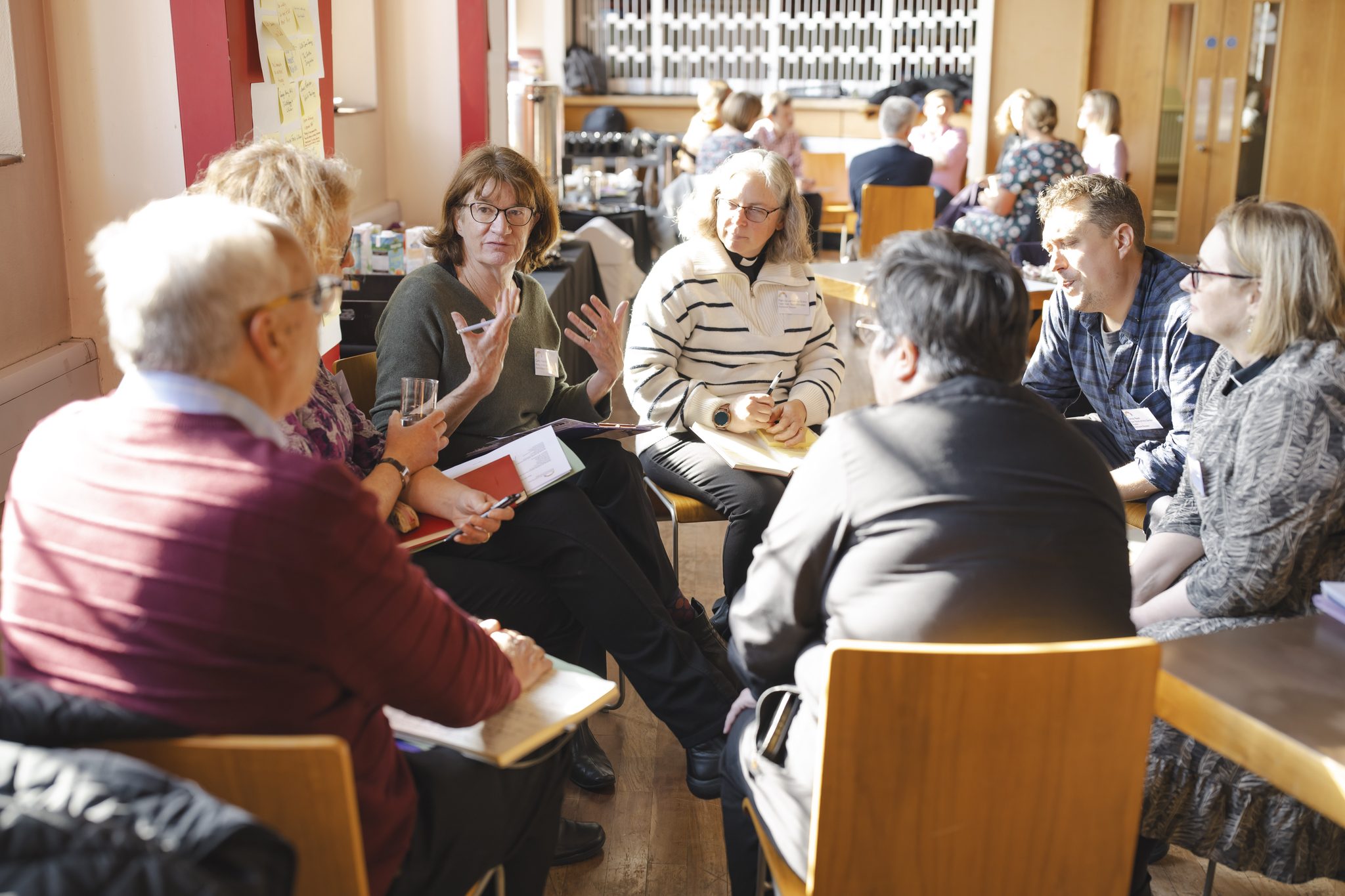
Reconciliation Initiatives was invited by the Diocese of Exeter to run a pilot workshop which explored how churches can start having helpful and honest conversations within congregations and with their local communities about flags and what it means to be English.
The Bishop of Crediton, the Rt. Rev’d Moira Astin is Chair of Trustees of Reconciliation Initiatives. The charity aims to help the Church to address inequalities and strengthen relationships in divided societies.
The training was delivered by Rev’d Dr Al Barrett, vicar of Hodge Hill Church, a multicultural parish in east Birmingham, and theologian, who has written on whiteness, and the church’s response to the Far Right, and Carey Haslam, RI’s Racial Justice lead, who has 28 years’ experience as a conflict consultant.
The session was attended by clergy and lay people from across Devon.
During the session, participants were invited to explore what it means to be English and the symbolism and meaning behind the George Cross, where it is being flown and why. The aim of the session was not to provide answers but to explore ways of starting helpful conversations on an emotive and polarised subject which can be hard to talk about.
Bishop Moria said: “Over recent months there has been an increase in the Exeter area of English flags flying on the lamp posts. This day was aimed to help people from our Diocese think through the issues, including the reasons people are feeling the need to fly these flags and how we can respond ina compassionate way to them as well as to those who feel that they are being targeted by such actions.”
Carey said: “It was a real pleasure to work with the Exeter group. They were very open to exploring and reflecting on the complex issue of Flags, Englishness and the Church of England. Being able to stay curious and to understand and hold the nuances of these complex and inter-related issues is key to maintaining the connections in our communities.”