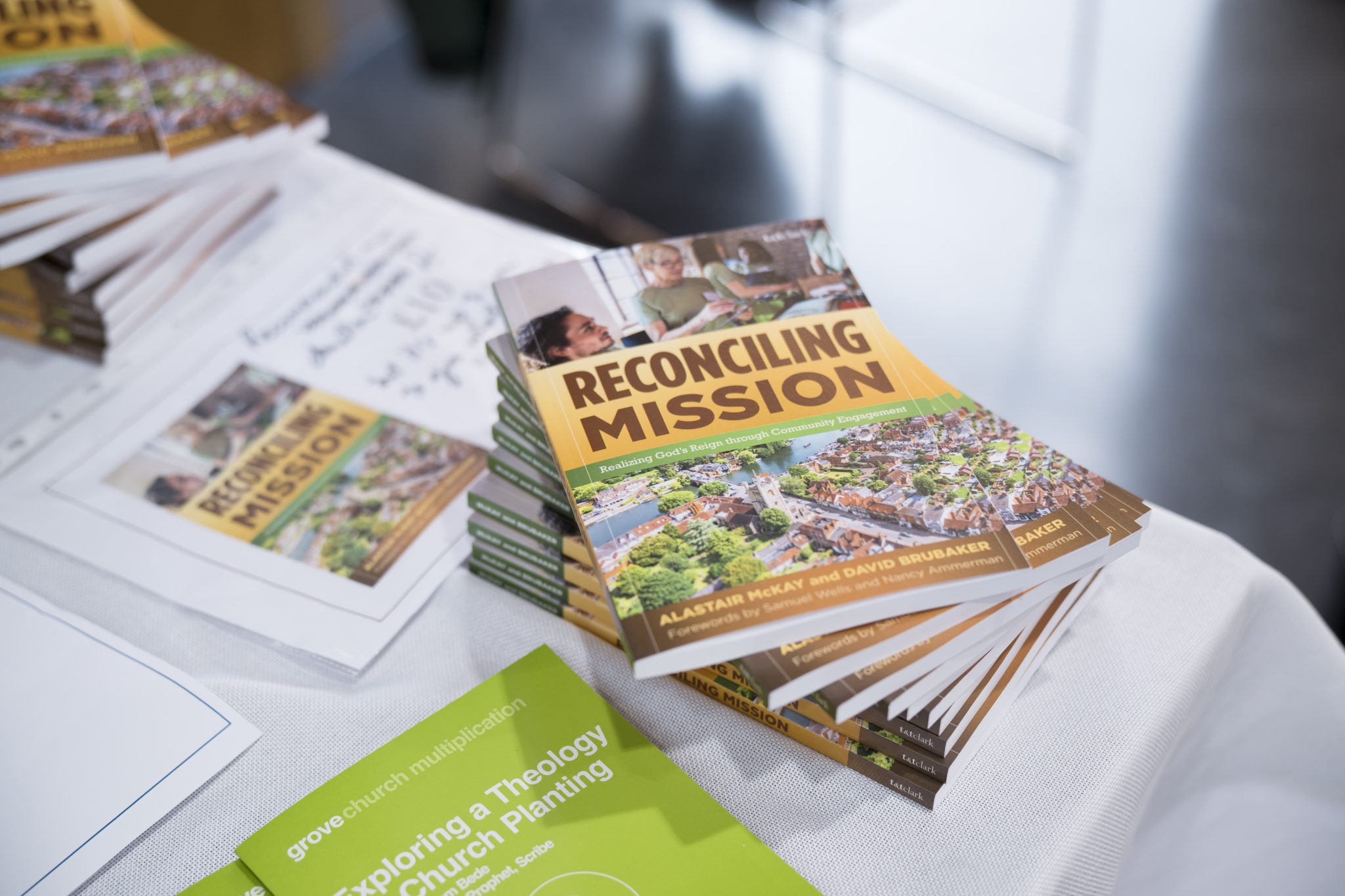
In this conversation, Alastair McKay (UK) and David Brubaker (USA) sit down to discuss their new book, Reconciling Mission. Drawing on decades of experience working with congregations on both sides of the Atlantic, they explore how churches can embrace a more human focus: neighbourliness.
Instead of trying to “save” the church through better music or flashier programmes to attract newcomers, the authors suggest a shift in perspective that addresses both internal conflict and external mission.
Why “looking out” stops the “arguing inside”
David shares a key finding from his research: when churches focus on internal changes, like how they worship or make decisions, it often triggers a natural human resistance, leading to conflict. However, there is one consistent exception. When a congregation begins any kind of community outreach, it is less likely to experience internal conflict than similar congregations that did not do so.
Alastair believes that when a group stops staring at its own problems and instead focuses on their neighbours and what is happening in the local community, everything changes. “The gaze is lifted,” he says. We are less likely to focus our worry about the removal of pews and putting in new chairs when we are busy supporting a neighbour to become less isolated and more connected, or when we are joining in with a community lunch club.
Learning to be a guest, not a host
A key thread within the book is the idea of being the “guest.” Traditionally, churches feel they need to be the “host”, the ones with the building, the coffee, and all the answers. Alastair is struck, however, that in the gospel stories, Jesus is often the guest. He doesn’t have a home base; he goes to other people’s houses and sits at their tables.
Instead of agonising over “How do we get people into our building?” Alastair and David suggest that our churches ask, “How can we support what our neighbours are already doing to contribute to the wellbeing of our community?” This takes the pressure off the church to be “the expert” or “the provider” and allows her to become a humbler partner instead.
No “magic formula”
The authors emphasise that what works in a small city in Arizona, USA, won’t necessarily work in a big global city like Birmingham, UK. Every neighbourhood is unique, every context is particular. The secret isn’t finding the “right programme”; it is about listening.
David recalls that when he began service as the executive director of a non-profit organisation he asked the board for six months to focus on having conversations with local leaders and neighbours rather than starting programs.
Four simple foundations to remember
For those wondering how to start this journey in their own community, the authors highlight four key ideas:
- Focus on place: Don’t try to change the whole world; seek instead to know and love the people on your street, in your neighbourhood.
- Build real friendships: Take the time to listen. Resist the temptation to try “fixing” things.
- Share the lead: You don’t need a “superhero” leader. You need other people who are willing to encourage, support and facilitate one another.
- Be patient: Real change takes time. Don’t panic if you don’t see results in a month, or even a year – because God is patient, even more than us.
A final note of hope
The interview ended on a hopeful note. Both Alastair and David believe the church doesn’t need to panic about “declining numbers.” If a congregation is willing to be a good neighbour, to be humble, to listen, to collaborate and to show up, there is the potential of a vibrant future ahead.
As David puts it: “God hasn’t given up on our neighbourhoods. We just need to wake up and notice where the Spirit is already at work among our neighbours and local community organisations.”
Support your mission and your ministry, buy the book here.